
When “a meal for today” isn’t enough: Why the Community Food Network chooses to focus on chronic food insecurity
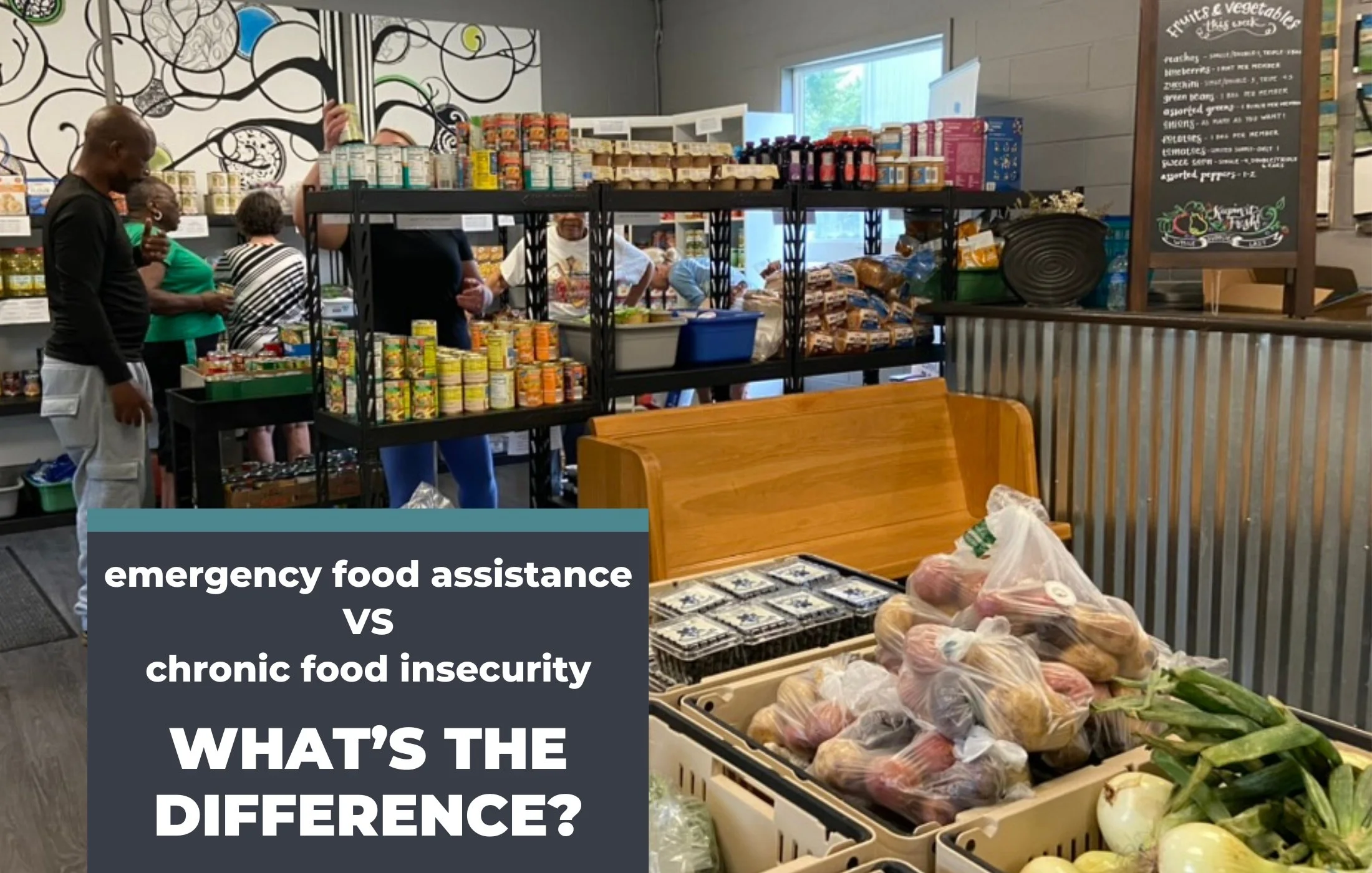
Imagine a leaky faucet with a constant drip. Emergency food assistance is the towel you grab to soak up the puddle before it spreads. It helps in the moment. But chronic food insecurity? That’s the leak itself—the one that keeps coming back, month after month, no matter how many towels you use.
Or think of it in the context of your mobile phone. Emergency assistance is the portable charger that saves you when your phone’s about to die. It gives you a lifeline for the day. Chronic food insecurity, though, is living without a reliable outlet—always running on low battery, always waiting for the next recharge.
At the Community Food Network (CFN), we do both: we hand out “towels” and “chargers”, because immediate needs matter. But our deeper calling is to fix the leak and help people plug into lasting power, so food stability becomes a way of life, not a fleeting relief.
Let’s break it down:
What is emergency food assistance?
Emergency food assistance meets an immediate crisis.
A job loss. A medical bill. SNAP benefits caught in the system. A week when the groceries just don’t stretch far enough. It’s about filling the gap right now—making sure no one goes hungry tonight. Food pantries, hot meals, and donation drives all serve this crucial purpose. They’re the towels and chargers that save the day.
What is chronic food insecurity?
Chronic food insecurity is a pattern, not a moment.
It’s the constant hum of worry: Will there be enough this week? What will we have to skip?
It’s the stress of low wages, unpredictable schedules, health costs, and lack of transportation—all compounding until food becomes a question mark instead of a certainty.
This isn’t about a bad week. It’s about a system that leaves people balancing every grocery trip on the edge of scarcity.
Why the difference matters
Here’s why it’s worth pausing on that distinction:
If we only respond to emergencies, we stay stuck in reaction mode. The puddle gets mopped, but the faucet still drips.
At CFN, we want to change the plumbing. We want to build structures—community partnerships, education, access, and empowerment—that stop hunger before it starts.
How SNAP fits into the picture
You may have heard that Michigan recently restored full SNAP benefits for residents. That’s a big deal. SNAP (the Supplemental Nutrition Assistance Program) is more than a meal card—it’s a stabilizer. It helps people stretch paychecks, plan meals, and stay connected to consistent nutrition. When those benefits were reduced, the chronically food insecure felt it first—and hardest. Their outlets disappeared.
Now that full benefits are restored, we see it as an opportunity: a chance to strengthen the connection between emergency assistance, long-term stability, and the systems that support both. At the Community Food Network, for those who have SNAP, we provide access to additional resources, and help build confidence in managing food budgets.
Why the CFN focuses on chronic food insecurity
Our mission goes beyond filling shelves—it’s about filling futures. We focus on chronic food insecurity because:
Dignity matters. Everyone deserves reliable access to nutritional food with choice-based grocery shopping experiences,
Health matters. When families can plan meals, health improves.
Community matters. Long-term stability lifts neighborhoods, not just households.
We do in fact, meet emergencies—because compassion starts with presence. But our deeper purpose is transformation: helping people fix the leak, recharge the battery, and build a life that doesn’t depend on constant crisis management.
If you’re reading this, you’re part of the story. You can help shift the narrative from reaction to restoration. Support the New Heights Community Food Network. Advocate for policies that sustain programs like SNAP. Give not just food—but time, ideas, and encouragement.
At the Community Food Network, we’ll keep handing out towels. But we’ll also keep turning wrenches. Because hunger isn’t just about food—it’s about systems, stability, and shared strength.
Together, we can do more than stop the leak.
We can fix it—for good.